First,
This year, you will hear a lot about Climate, just like we learnt a lot about medicines and diseases during Covid. We just had the coolest summer for the rest of our lives and hottest summer till now.
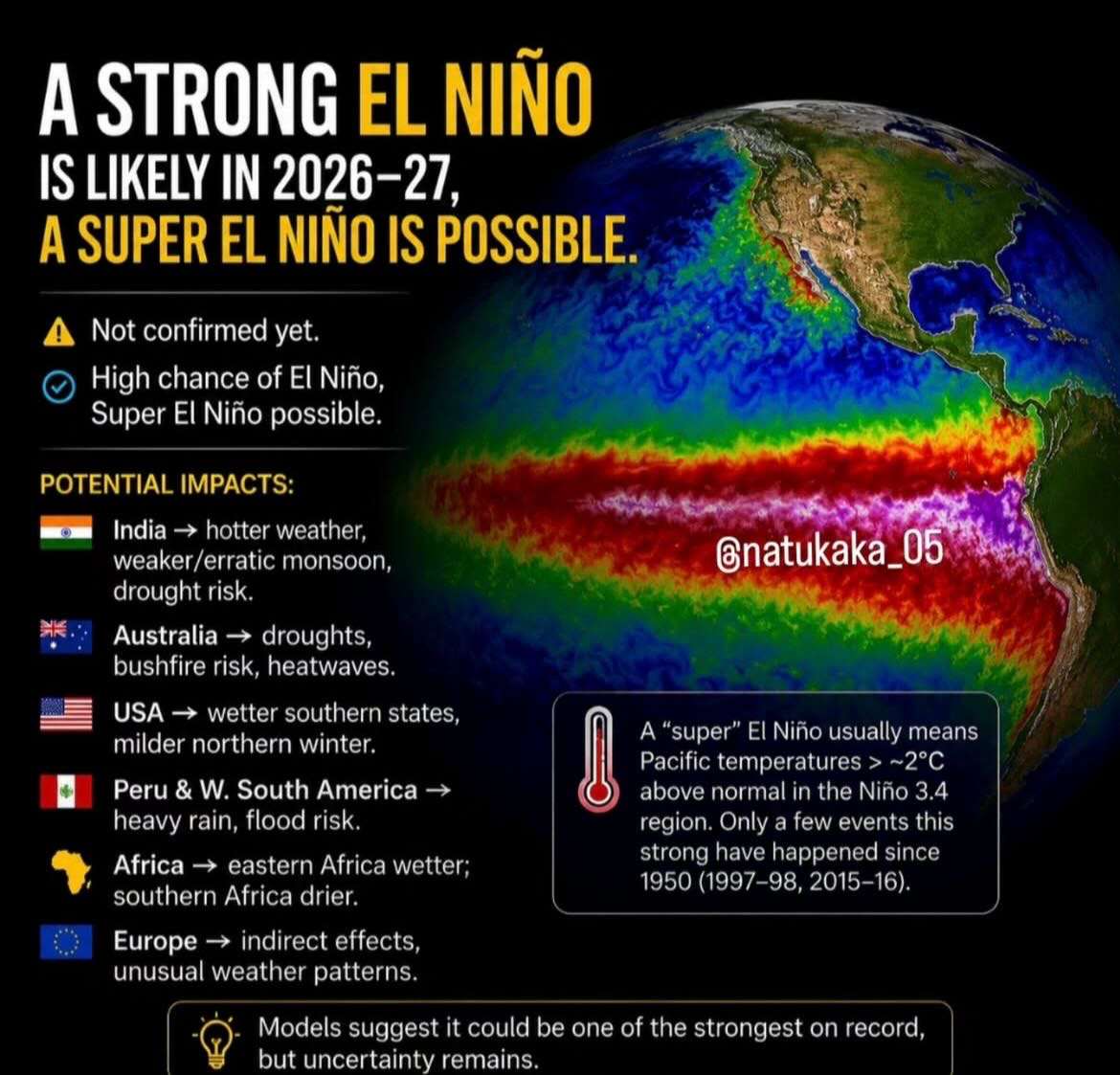
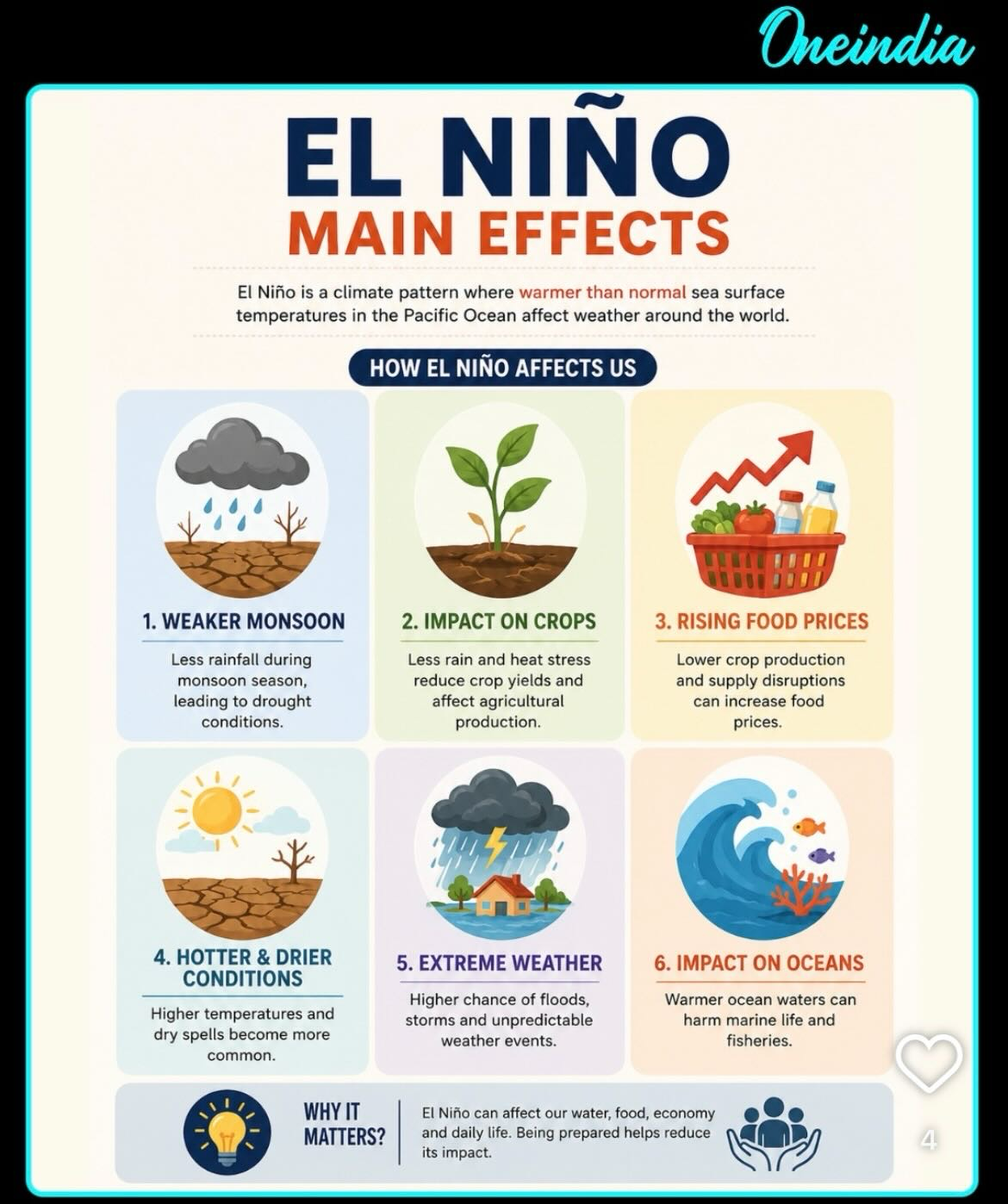
There is a once in a lifetime event that is happening in World Climate and weather as we speak which is called ” Strong El Nino ” . Going back to history, to the year 1870’s , we had a Great famine/South Famine /Madras Famine , resulting in approximately 82 lakh deaths in southern and Western India and El Nino is one the prime reason for it. El Nino , on simple terms is the heat produced in Pacific ocean which effects our Indian Monsoon winds during its course. Things may not be worse as previous but definitely worrisome given that we are already being delayed monsoons, heat induced cloudbursts in place of pleasant monsoon rains by Mid of June.
Second,
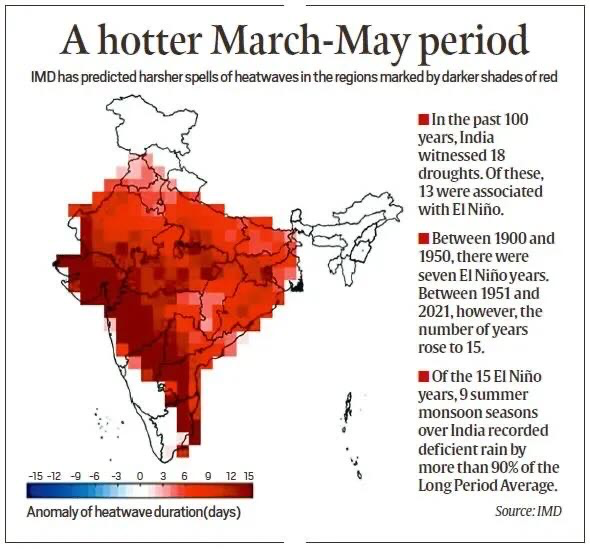
As we are observing , we are now getting more cloud bursts of rains , uneven and erratic monsoons , more number of days of Heatwaves in a year and more number of days with winter cold waves.
How do we remediate and build resilience ourselves amongst all of these, at individual level, at community level and at governance levels ?
Individual :
- If you are searching for a home, look at localities that are near to big green spaces and have good ventilations . Avoid local flooding points ( For Hyderabad, there is a map where the lakes are supposed to be present and as I can see lot of lakes have now vanished but they are now waterlogging points , Link : https://lakeatlas.hyderabad.urbanobservatory.in)
- Avoid wastage of water and Electricity . Much of Indian electricity is still produced via harmful thermal energy and our water usage is directly proportional to electricity usage. Either via groundwater retrieval or tankers or municipal water supply require large amounts of electricity .
- If you can , setup solar rooftop electricity systems , paint the roofs with temperature decreasing varieties and most importantly do rain water harvesting.
Community :
- Preserve water bodies and natural vegetation.
- Focus on non-water intensive crops , avoid Rice and sugarcane , prioritize Millets and pulses and other draught resistance crops.
- Provide adequate feedback to governments to tackle these issues.
Governments should prioritize Climate Action plans, such as cool roofs policies , encouraging green infrastructure , preserving big water bodies , water harvesting mandates . We do have successful implementations across the world.
Ofcourse Indian governments are realizing them now and have started city Climate Action plans , large scale green plantation drives, Solar electricity incentives. But , a lot need to be done and even more to bring awareness among the public so that we can successfully build resilience and remediate the climate changes that would be see in our lifetime.
Third,
Harsh Climates also mess up with Human Biology and Agriculture . A single day of heatwave causes almost 3500 additional deaths in the country and these are official records. Wet bulb temperature, it measures how effectively human body can cool itself is almost reaching its limit. A 30C wet bulb is a barrier above which human body starts loosing its comfort. (https://zoom.earth/maps/temperature-wet-bulb/) . The gut starts behaving differently in hot climates , and that’s one big reason we don’t feel like eating much in Summers.
Antibiotic Microbial Resistance (AMR) is another big pandemic we would see in our lifetime and the Antibiotic resistance genes is proven to be accelerated with rise and extreme temperatures, in simple terms, medications would not be as efficient as earlier. Also, the oscillation of Rainy days followed by heat days , increases mosquitoes growth exponentially.
Agriculture is the biggest victim of Climate Change. Erratic and improper rains cause destruction and not a week goes by in the news where we see some farmer has lot his crop due to some unseasonal rains. This causes improper agriculture practices and huge losses to our largely agriculture dependent financial.
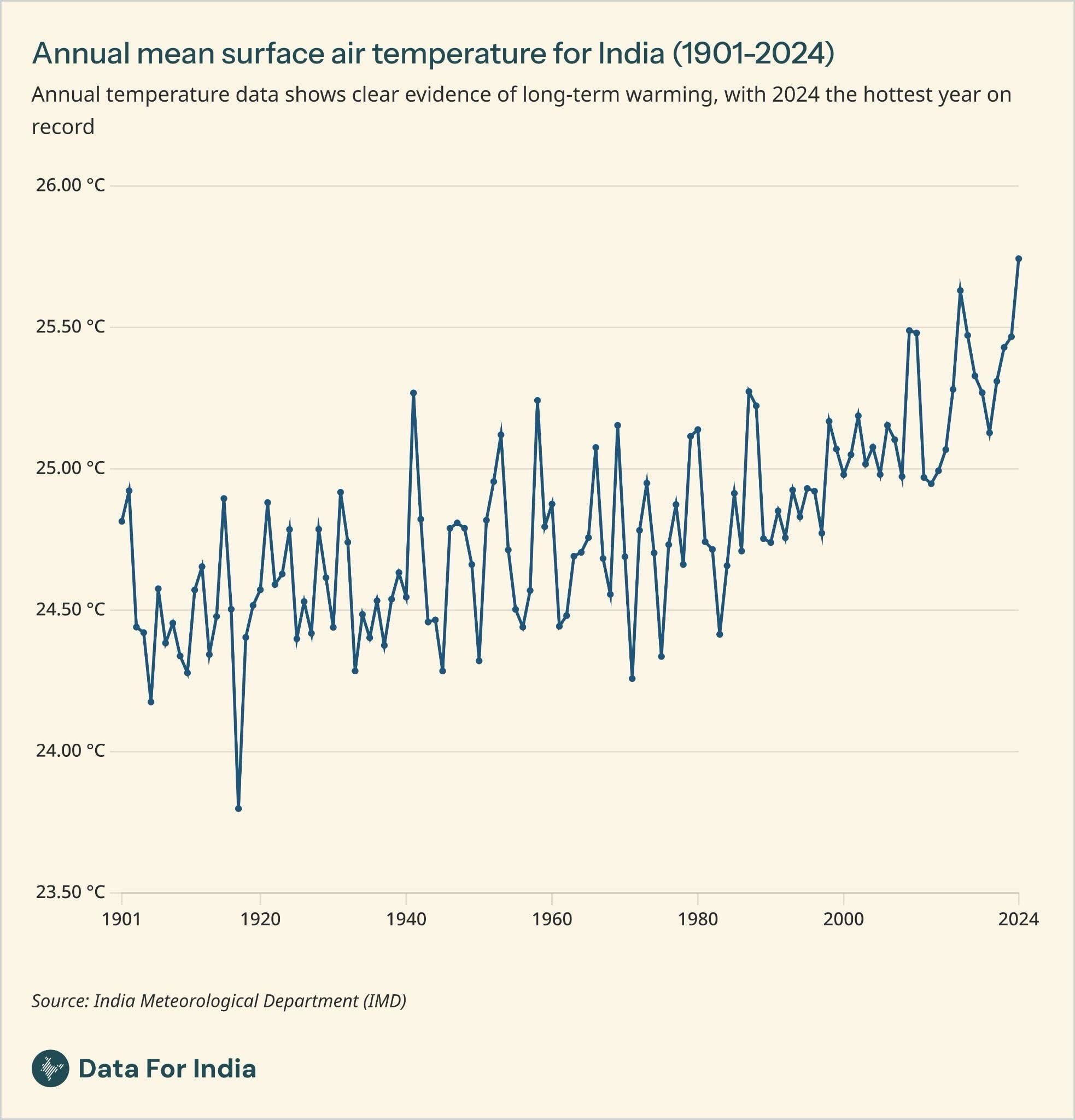
The data shows clearly that the average temperatures have risen significantly over the years and is more exacerbated by the rapid urbanization with concrete jungles and deforestation at scales cannot even imagine. The more faster we realize and even more focus on building resilience and remediation measures is better for all .
No country or no person is above nature !!
 VamS
VamS 