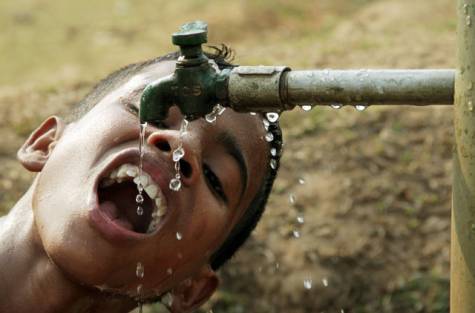
India is suffering from the worst water crisis in its history and millions of lives and livelihoods are under threat. Currently, 600 million Indians face high to extreme water stress and about two lakh people die every year due to inadequate access to safe water. The crisis is only going to get worse. By 2030, the country’s water demand is projected to be twice the available supply, implying severe water scarcity for hundreds of millions of people and an eventual ~6% loss in the country’s GDP.
- 70% of our water is contaminated; India is currently ranked 120 among 122 countries in the water quality index.
- 40 % of the population will have no access to drinking water by 2030.
21 cities, including New Delhi, Bengaluru, Chennai and Hyderabad will run out of groundwater by 2020, affecting 100 million people. - More worryingly, the low performers on the Water Index are home to ~50% of the country’s population, thereby highlighting the significant water risk faced by the country.
- The low performers are, worryingly, comprised of the populous northern states of UP, Bihar, Rajasthan, Haryana, and others, and are home to over 600 million people.
- Maharashtra has the highest number of large dams in the country (2,354), but only 18% of the state is irrigated, indicating a wide gap between irrigation potential created and irrigation potential actually utilized.
- While urban water access is high on average, significant gaps remain across the country, and waste water treatment remains stuck at the national average of ~33%.
- Almost none of the states have built the infrastructure required to recharge groundwater in over exploited and critical units, thereby highlighting a key constraint in the recharging process.
- 52% of India’s agricultural area remains dependent on rainfall; the future expansion of irrigation needs to be focused on last mile efficiency.
- Going forward, states need to increase investments in waste water treatment to both meet the growing demand due to rapid urbanization and enable reuse of water.
- On average,~40% of the urban households in the country pay for water, but this value varies widely across states.In eight out of 22 of the reporting NonHimalayan states, more than 50% of urban households pay for the water supply. However, in several populous states such as UP and Bihar, a negligible proportion of households pay for water. Similar variation takes place across North-Eastern and Himalayan states as well, ranging from 90% in Uttarakhand to 0% in Assam.
Some successful happenings :
Gujarat’s rural water supply programme, led by the state’s Water and Sanitation Management Organisation (WASMO), aims to supply the village community with adequate, regular and safe water through household- level tap water connectivity, including households of people from backward communities.
Gujarat has achieved a 100% score in the ‘Rural drinking water’ of the Water Index, implying that it provides clean water to all of its ~35 million rural residents.
Madhya Pradesh’s ‘Bhagirath Krishak Abhiyan’ began in 2006 in the Dewas district through the efforts of a local IAS officer and is focused on the restoration of farm
ponds to boost irrigation potential. The programme has resulted in the construction of thousands of farm ponds to boost irrigation potential,
through the efforts of local farmers, government officers, and financial institutions such as NABARD.
Andhra Pradesh’s online water dashboard :For groundwater, this means that all units have been mapped and recharge infrastructure created where required, and levels are being monitored in real-time, with interventions such as a ban on extraction being implemented as per need .This data and monitoring system has helped Andhra Pradesh achieve an 80% score on the ‘Source augmentation (Groundwater)’ of the Index,the highest in the country. The state has mapped 100% of its critical and over-exploited units and constructed recharge infrastructure across 96% of these, in addition to having created a regulatory framework for managing groundwater.
What Govts should do :
Governments need to allow local bodies to implement, maintain, and price local drinking water supply. This ensures a strong incentive structure
where the people most affected by the supply are the ones responsible for its maintenance and sustainability.
States need to create robust water data systems with real-time monitoring capabilities to ensure that the data can be used to target policy interventions and enable innovation in the broader water ecosystem.
Community efforts for the creation of water conservation infrastructure need to be supported through the provision of adequate financing; banks such as NABARD and RRBs are well placed to lend for these efforts given their past association with farmers.
Coming to Telugu states,
Andhra Pradesh:
Water index score has decreased a bit from 68.5 to 66.0
Things going well :
Groundwater restoration: All over-exploited wells in the state have been mapped and have recharging data.
Participatory irrigation : 70 % of irrigated area is maintained by WUA’s .
Data: The state has setup a state of the art , online public platform for water data , including GIS mapping and daily updates.
Things to improve :
Drinking water in rural areas : More than a third of rural habitats do not have full access to drinking water.
waste water treatment : the state treats only 26% of its urban waste water due to low installed capacity.
Urban water pricing : More than 50% of urban households are charged nothing for water , leading to overuse.
Telangana :
Water Index score has improved from 45.2 to 49.8
Things going well:
Surface and groundwater restoration :The state has restored 70% of the irrigation potential of identified bodies and 90% of critical wells have improved.
Urban water: 80% of urban households have access, with 75% of them charged for the supply.
Things to improve :
on-farm use :The state has not begun the process of power feeder segregation , is one of the few states to not charge for borewell electricity,and has negligible micro-irrigation coverage.
Rural drinking water : Only 55% of rural habitations have been fully covered, and there has been no improvement in water quality.
Link to NITI Aayog report :
 VamS
VamS 